How to Get Better Sleep During Perimenopause
Better perimenopause sleep requires addressing both hormonal and behavioral factors: a cool 60-67°F bedroom, consistent sleep schedule, no alcohol within 3 hours of bed, no caffeine after noon, magnesium glycinate, morning light, and treating night sweats directly. CBT for insomnia is more effective than sleep medication long-term.
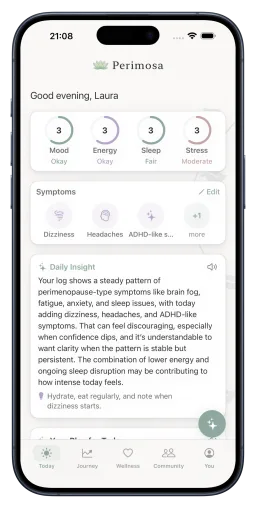
Finally understand what your body is doing
Perimosa logs how you feel each day, finds the pattern, and gives you the words to take to your doctor. Free on iPhone and iPad.
Get the free appHormonal Sleep Is Different
Standard sleep hygiene advice often falls short for perimenopausal women because the underlying problem is different. You're not just stressed or bad at sleep -- you're dealing with night sweats that fragment sleep without fully waking you, declining progesterone that historically promoted sleep, cortisol shifts that produce 3am awakenings, and lighter sleep architecture overall. The fixes that work address these specific mechanisms, not just general sleep advice.
The Environment Layer
Keep your bedroom 60-67°F (15-19°C) -- this is the single biggest environmental factor. Use moisture-wicking sheets and sleepwear. Run a fan even if you don't think you need it. Keep ice water by the bed. Block all light (true blackout curtains or a quality eye mask). Reduce noise or use a steady white-noise source. Charge your phone outside the bedroom -- it removes both the temptation and the cognitive load of being reachable.
The Behavior Layer
Keep a consistent sleep and wake time, including weekends -- circadian rhythm needs predictability. Get morning sunlight within an hour of waking to anchor your rhythm. No caffeine after noon (its half-life is longer than you think, and longer during perimenopause specifically). No alcohol within 3 hours of bed -- it disrupts the second half of sleep even if it helps you fall asleep. Build a 30-60 minute wind-down ritual: dim lights, no screens, calming activity. Skip late large meals.
When You Need More
If the foundations don't fix it, escalate. Magnesium glycinate (200-400mg) at night has good evidence. Treating night sweats directly -- through HRT or non-hormonal medications -- often resolves the sleep issue downstream. CBT for insomnia (CBT-I) is more effective than sleep medications long-term and can be done via app or with a therapist. Sleep medications can help short-term but build tolerance and don't address root cause. Rule out sleep apnea, which often gets missed in women and is treatable.
The Sleep Audit Most Women Should Do
Before adding more interventions, audit what's already disrupting your sleep. Common hidden disruptors that women don't realize are hurting them: alcohol within 3 hours of bed (even one glass disrupts the second half of sleep dramatically), screens (especially phone) in the last hour, late caffeine, late heavy meals, bedroom temperature above 68°F, a partner who snores, charging the phone within reach, room not dark enough, inconsistent bedtime, or untreated night sweats. Tracking sleep quality in Perimosa for 2 weeks alongside what you did that day usually reveals 2-3 disruptors you can eliminate. Removing the obstacles often improves sleep more than adding new strategies.
Why Sleep Hygiene Often Fails Perimenopausal Women
Standard sleep hygiene advice (consistent schedule, no screens, dark room) is necessary but often insufficient for perimenopausal women. The reason: it doesn't address the specific mechanisms causing your sleep disruption. Night sweats need temperature management. 3am wake-ups need cortisol regulation. Anxiety-driven insomnia needs different tools than menopause-driven insomnia. The most effective approach matches interventions to specific patterns. Tracking what wakes you up (sweats vs anxiety vs no obvious reason) and when (early hours vs middle vs early morning) helps identify which mechanisms apply to your particular case. Then you can target appropriately rather than throwing every sleep hygiene tip at the wall.
Practical Stack That Works for Most Women
Combining the right interventions in the right order works for most perimenopausal women. Start with environment: 60-67°F bedroom, moisture-wicking bedding, blackout, white noise. Then behavior: consistent sleep/wake times, no alcohol within 3 hours of bed, no caffeine after noon, 30-60 minute wind-down ritual. Then targeted supplements: magnesium glycinate 200-400mg evening, glycine 3g pre-bed for some women. Then specific interventions for your pattern: treating night sweats if they're disruptive, CBT-I if anxiety-driven, sleep apnea evaluation if daytime exhaustion is severe. Track in Perimosa to measure what's actually working over 4-6 weeks rather than guessing.
Bottom Line
Sleep during perimenopause requires more than generic sleep hygiene. Audit current disruptors (especially alcohol, temperature, screens), match interventions to your specific sleep disruption pattern, and track progress in Perimosa over weeks to measure what's working. For most women, environmental optimization plus eliminating alcohol within 3 hours of bed plus magnesium glycinate produces meaningful improvement within 2-4 weeks. For drenching night sweats or severe insomnia despite consistent foundation work, escalate to medical treatment -- HRT, gabapentin, or CBT-I are all effective options. Don't accept years of bad sleep when targeted treatment exists.
References
Medical disclaimer: This article is for informational purposes only and does not constitute medical advice. Always consult a qualified healthcare provider for diagnosis and treatment decisions. Perimosa is a symptom tracking tool, not a medical device.