How to Stop Night Sweats During Perimenopause Naturally
Natural strategies that reduce perimenopause night sweats include keeping your bedroom 60-67°F, using moisture-wicking sleepwear and bedding, avoiding alcohol within 3 hours of bed, limiting spicy food and caffeine, managing stress, and taking magnesium glycinate at night. Black cohosh has modest evidence for some women.
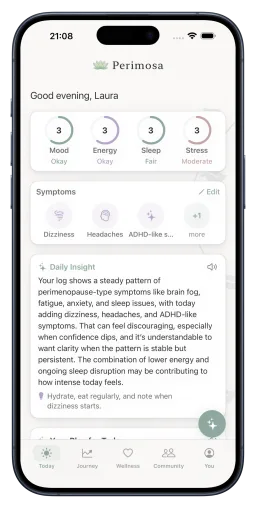
Finally understand what your body is doing
Perimosa logs how you feel each day, finds the pattern, and gives you the words to take to your doctor. Free on iPhone and iPad.
Get the free appOptimize Your Sleep Environment
The single highest-impact change for night sweats is bedroom temperature. Keep it 60-67°F (15-19°C). Use breathable, moisture-wicking sheets -- bamboo, eucalyptus (Tencel), or cotton in lighter weaves. Skip heavy synthetic comforters. Sleep in moisture-wicking sleepwear (or nude, which many women find cooler). Keep a fan running for both temperature and air circulation. Keep a glass of ice water and a cooling cloth by the bed for quick relief during episodes.
Eliminate Common Triggers
Several daily habits dramatically worsen night sweats. Alcohol, even one drink, is a major trigger -- it dilates blood vessels and disrupts thermoregulation. Avoid alcohol within 3 hours of bed at minimum. Spicy food at dinner can trigger overnight sweats. Late caffeine (after noon for many perimenopausal women) raises core temperature and disrupts deep sleep. Eating large or heavy meals close to bedtime increases body heat as you digest. Tracking your sweats alongside what you ate and drank reveals personal triggers.
Stress Management Matters
Cortisol affects thermoregulation. High stress, anxiety, or rumination right before bed all increase the likelihood of night sweats. Implement a wind-down ritual: 30-60 minutes before sleep, dim lights, no screens, calming activity (reading, gentle stretching, meditation). Daily stress practices -- even 5-10 minutes of breathing exercises or meditation -- reduce baseline cortisol over weeks. CBT for insomnia specifically targets the cycle of stress and poor sleep that worsens night sweats.
Supplements With Evidence
Magnesium glycinate (200-400mg in the evening) helps with sleep quality and may indirectly reduce sweats. Black cohosh has modest evidence for reducing both hot flash and night sweat frequency in some women (allow 4-8 weeks). Soy isoflavones help some women but not others. Sage (yes, the herb) has some evidence in tea or supplement form for reducing sweating specifically. If natural approaches don't provide enough relief and sweats are fragmenting sleep, talk to your doctor about HRT or non-hormonal medications -- there's no virtue in suffering.
The Specific Routine That Works for Most Women
Combining the right strategies in the right order produces meaningful improvement for most women. Day-of preparation: avoid alcohol entirely, finish dinner 3+ hours before bed, no caffeine after noon, complete a 10-minute wind-down ritual before bed. Bedroom setup: 60-67°F, fan running, moisture-wicking sheets, breathable sleepwear, ice water and cooling cloth by the bed. Daily habits: 200-400mg magnesium glycinate in the evening, 8000+ steps daily, strength training 2-3x weekly, daily stress practice. Track your night sweat frequency and severity in Perimosa before starting and during -- most women see 30-50% reduction in episodes within 4-6 weeks once they're consistent with this stack.
When Natural Strategies Aren't Enough
Be honest with yourself about whether natural approaches are working. Six weeks of consistent foundation work should produce measurable improvement. If you're still drenching the bed nightly, waking 3+ times per night, and chronically exhausted after committed effort, natural strategies aren't sufficient for your severity and that's not a personal failure. HRT is the most effective treatment for severe vasomotor symptoms and dramatically improves sleep when night sweats are the primary disruptor. Non-hormonal options (gabapentin, low-dose SSRIs, fezolinetant) work well for women who can't or don't want HRT. Suffering for years when effective treatment exists is unnecessary.
Why Tracking Matters Even for Natural Approaches
Without tracking, you can't tell whether your natural interventions are actually working or whether you're just on a 'better week' coincidentally. Establish a 2-week baseline before starting any new approach. Log nightly: number of sweat episodes, severity (mild/moderate/drenching), whether you changed sleepwear or sheets, how rested you felt in the morning. Compare baseline to weeks 4-6 of intervention. Real measurement turns 'I think this is helping' into 'My drenching episodes dropped from 4/week to 1/week and my morning energy improved 30%.' This is also what shows your doctor objective data if you eventually need to escalate to medical treatment.
Bottom Line
Natural strategies meaningfully reduce night sweat frequency and severity for most women, particularly when stacked consistently over 4-6 weeks. Start with environmental optimization (cool room, moisture-wicking bedding), eliminate alcohol within 3 hours of bed, add magnesium glycinate, and build foundation health habits. Track in Perimosa to measure actual results. For mild-to-moderate night sweats, this approach often produces 30-50% improvement. For severe drenching episodes, add medical treatment to the natural foundation -- don't choose between them. The goal isn't natural-purity, it's actual relief that lets you sleep.
References
Medical disclaimer: This article is for informational purposes only and does not constitute medical advice. Always consult a qualified healthcare provider for diagnosis and treatment decisions. Perimosa is a symptom tracking tool, not a medical device.