Why Do I Have Night Sweats But Not Hot Flashes?
Night sweats without daytime hot flashes is common in perimenopause. Body temperature naturally drops at night to enable sleep, narrowing the thermoneutral zone further. Hormonal fluctuations during deep sleep, cortisol shifts, and bedroom warmth combine to trigger sweating that doesn't appear during the day.
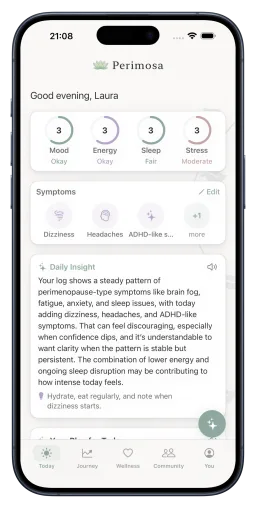
Finally understand what your body is doing
Perimosa logs how you feel each day, finds the pattern, and gives you the words to take to your doctor. Free on iPhone and iPad.
Get the free appWhy Nighttime Is Different
Your core body temperature naturally drops a couple of degrees overnight as part of the sleep cycle. This narrows the thermoneutral zone -- the temperature range your body considers comfortable -- making nighttime physiologically more vulnerable to the temperature dysregulation of perimenopause. Even women who don't feel hot flashes during the day may sweat at night because the system tips over the threshold more easily when it's already running cooler.
Sleep Cycles and Hormones
Hormonal fluctuations don't pause for sleep. In fact, hormone shifts during REM and deep sleep stages are when many night sweats occur. The body is also less able to compensate during sleep -- you can't kick off a blanket as readily, move to a cooler room, or adjust clothing the way you would awake. So even moderate temperature dysregulation that wouldn't register as a hot flash during the day produces sweating at night.
Other Causes to Consider
While perimenopause is the most likely cause in women 40+, other conditions can produce night sweats. Sleep apnea is a common cause and frequently goes undiagnosed in women. Hyperthyroidism, low blood sugar overnight, certain medications (antidepressants are notable), GERD, infections, and lymphoma can all cause night sweats. If sweats are drenching, persistent, accompanied by weight loss, fevers, or fatigue, see a doctor for a workup.
What Helps Nighttime Sweating
Keep your bedroom cool (60-67°F is the sweet spot). Use cooling, moisture-wicking sheets and sleepwear. Avoid alcohol within 3 hours of bed -- it disrupts thermoregulation. Skip heavy meals before sleep. Practice cool-down rituals like a tepid shower. Keep ice water by the bed. For severe night sweats fragmenting sleep, HRT and non-hormonal medications are both options worth discussing with your doctor. Tracking when sweats hit helps identify triggers.
Why You Might Be Having Hot Flashes Without Knowing
Many women who think they only have night sweats are actually having mild daytime hot flashes they're not recognizing. Subtle daytime episodes -- a sudden flush of warmth, a few seconds of feeling overheated, slight clamminess that resolves quickly -- get dismissed as 'just being warm.' Tracking carefully for 2-3 weeks often reveals 3-5 daytime episodes daily that the woman previously didn't count as hot flashes. The pattern of 'night sweats only' is real for some women, but it's also over-reported because daytime episodes are easy to miss. Logging every warmth episode (including duration and what preceded it) in Perimosa for 2 weeks usually reveals the true picture.
How Night Sweat Severity Maps to Sleep Quality
Not all night sweats fragment sleep equally. Mild dampness on the chest or back you barely notice may have minimal impact. Drenching sweats that require changing sleepwear or sheets significantly fragment sleep architecture, reducing deep sleep and REM. Some women have 'thermoregulation events' -- waking warm without obvious sweating, then unable to cool down. All three patterns count as vasomotor symptoms but respond to different interventions. Tracking which type you have helps target treatment: cooling environment for mild cases, moisture-wicking bedding plus magnesium for moderate, and medical intervention (HRT, fezolinetant, gabapentin) for severe drenching episodes that destroy sleep.
When to Rule Out Other Causes
Night sweats have several non-hormonal causes worth ruling out, especially if they're recent and drenching. Sleep apnea causes night sweating in about 30% of cases and is wildly underdiagnosed in women -- the typical female presentation includes fatigue, insomnia, and mood symptoms rather than the loud snoring seen in men. Hyperthyroidism increases heat production. Low blood sugar overnight (especially in women on certain diabetes medications or eating insufficient evening protein) triggers sweating. Some medications, especially SSRIs and tamoxifen, cause night sweats. Persistent severe drenching sweats with weight loss, fevers, or fatigue need a workup for infection or lymphoma, not assumption.
Bottom Line
Night sweats without daytime hot flashes is a common and real perimenopause pattern, driven by the body's narrower thermoneutral zone during sleep. But before accepting this as the explanation, track carefully for 2-3 weeks (you may discover mild daytime episodes you missed), rule out sleep apnea if you're tired daily, and request basic labs (thyroid, glucose) if symptoms started recently. For confirmed isolated night sweats, environmental optimization usually goes farther than supplements. For drenching episodes destroying sleep, HRT and fezolinetant work well -- there's no reason to suffer for years when effective treatment exists.
References
Medical disclaimer: This article is for informational purposes only and does not constitute medical advice. Always consult a qualified healthcare provider for diagnosis and treatment decisions. Perimosa is a symptom tracking tool, not a medical device.