What Supplements Help With Perimenopause?
Supplements with the strongest evidence for perimenopause include magnesium glycinate for sleep and anxiety, vitamin D for mood and bone health, omega-3 fatty acids for mood and inflammation, B-complex for energy, and black cohosh for hot flashes. Effects vary by individual -- track to confirm what works.
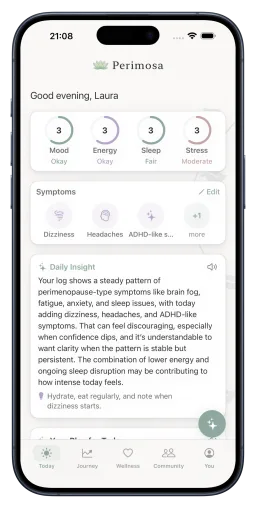
Finally understand what your body is doing
Perimosa logs how you feel each day, finds the pattern, and gives you the words to take to your doctor. Free on iPhone and iPad.
Get the free appMagnesium
Magnesium has strong evidence for improving sleep quality, reducing anxiety, easing muscle tension, and supporting mood. Many women are mildly deficient. The form matters: magnesium glycinate is best absorbed and least likely to cause digestive issues; magnesium oxide is poorly absorbed; magnesium citrate works but can cause loose stools. Typical dose is 200-400mg in the evening. Take consistently for 4-6 weeks to evaluate effect.
Vitamin D and Omega-3
Vitamin D deficiency is common in perimenopausal women and directly affects mood, energy, immune function, and bone density. Get your level tested -- aim for 40-60 ng/mL. Most women need 2000-4000 IU daily. Omega-3 fatty acids (EPA and DHA) reduce systemic inflammation, support mood, may reduce hot flash frequency, and protect cardiovascular health. Look for 1000-2000mg combined EPA/DHA daily from a quality fish oil or algae source.
Black Cohosh
Black cohosh is the most studied herbal supplement for hot flashes. Quality evidence suggests it can reduce hot flash frequency by 25-30% in some women. It's not estrogenic -- it works through different pathways including serotonin. Effects appear after 4-8 weeks of consistent use. Quality varies dramatically by brand; choose products standardized to 27-deoxyactein content. Stop if liver enzymes rise (rare but documented). Not appropriate for women with liver disease.
What's Less Reliable
Many supplements marketed for menopause have weak evidence: maca, wild yam cream, dong quai, evening primrose oil, and most 'menopause complex' multi-ingredient blends. Soy isoflavones have mixed evidence -- they help some women and not others. Bioidentical compounded hormones marketed as supplements have safety concerns. The supplement industry is largely unregulated, so quality varies. Stick with single-ingredient products from third-party tested brands. Track symptoms before and after starting any supplement to evaluate actual benefit.
How to Test Whether a Supplement Actually Works
The supplement industry profits enormously from women trying products that don't work. The way to avoid wasting money: structured n-of-1 testing. Pick one supplement at a time. Establish a baseline by tracking your target symptoms (sleep quality, hot flash count, mood, energy) in Perimosa for 2 weeks BEFORE starting. Take the supplement consistently for 6-8 weeks. Compare your tracked symptoms before vs after. If you see no clear improvement, stop and try something else. Most women try 3 supplements simultaneously, see modest improvement from one, and credit the wrong one -- wasting money on placebo for years. Structured testing is how you find what actually moves the needle for your specific body.
Quality Matters More Than You Think
Because supplements are unregulated in the US, quality varies wildly. Third-party testing matters enormously. Look for products tested by USP, NSF, or ConsumerLab. Reputable brands publish certificates of analysis. Avoid 'proprietary blends' that don't disclose individual ingredient doses -- they're usually subtherapeutic. Avoid products with massive ingredient lists (15+ items at low doses each) -- 'menopause complex' formulas almost universally fall in this category. Stick to single-ingredient products from brands with clear sourcing. Cheap supplements often mean low-quality ingredients, contaminants, or inaccurate dosing. The supplement aisle at the pharmacy is a minefield -- research before you buy.
What's Often Recommended But Lacks Evidence
Several heavily-marketed supplements have weak or contradictory evidence. Wild yam cream doesn't convert to progesterone in the body despite marketing claims. Maca has minor effects in some studies and null effects in others. DHEA improves some sexual symptoms but isn't a perimenopause cure-all. 'Bioidentical' compounded hormones sold as supplements are not FDA-regulated and have safety concerns. Evening primrose oil is widely recommended but evidence for menopausal symptoms is weak. Red clover isoflavones help some women but not consistently across studies. None of these are necessarily harmful, but the marketing far outpaces the evidence.
Bottom Line
Supplements can genuinely help with perimenopause symptoms, but only when chosen carefully and tested individually. Start with the four with the strongest evidence: magnesium glycinate, vitamin D (after testing your level), omega-3s, and a quality B-complex. Add black cohosh if hot flashes are your primary concern. Track your symptoms in Perimosa before and during supplementation to confirm actual benefit. Skip the multi-ingredient 'menopause complex' formulas. If natural approaches don't meaningfully reduce severe symptoms within 8-12 weeks, talk to your doctor about HRT or other medical options -- supplements aren't a substitute for treatment when symptoms are significantly impacting your life.
References
Medical disclaimer: This article is for informational purposes only and does not constitute medical advice. Always consult a qualified healthcare provider for diagnosis and treatment decisions. Perimosa is a symptom tracking tool, not a medical device.