Is Perimenopause the Same as Premenopause?
No, perimenopause and premenopause are not the same. Premenopause technically refers to all the years before any perimenopausal changes begin -- essentially your reproductive years. Perimenopause is the transition phase with hormone fluctuations and symptoms. The terms are often confused but mean different things medically.
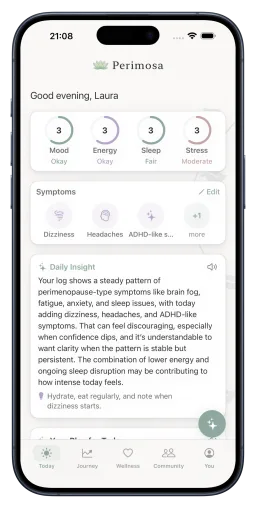
Finally understand what your body is doing
Perimosa logs how you feel each day, finds the pattern, and gives you the words to take to your doctor. Free on iPhone and iPad.
Get the free appPremenopause Defined
Premenopause technically describes the entire reproductive life before any signs of the menopausal transition begin. A 25-year-old with regular cycles and no symptoms is premenopausal. So is a 35-year-old with normal cycles and no shifts in symptoms. Premenopause covers all the years your reproductive system is functioning normally and stably. It ends when perimenopausal changes begin -- whether that's at 38, 42, or 46.
Perimenopause Defined
Perimenopause is the transitional phase when your ovaries begin gradually declining in function. Hormones fluctuate erratically. Cycles change. Symptoms emerge. This phase lasts an average of 4-8 years, though it can be shorter or longer. It begins quietly with subtle shifts and ends with the final menstrual period. Throughout perimenopause, you're still capable of ovulating and becoming pregnant -- the system is winding down, not yet shut off.
Why the Confusion
The two terms get mixed up for several reasons. They sound similar. In casual conversation -- and even in some medical contexts -- people use 'premenopause' to mean 'before menopause' (which technically includes perimenopause). Some older medical literature used the terms differently than current standards. Marketing for products sometimes blurs the distinction. The result is widespread confusion that doesn't usually affect treatment but does affect how women understand and describe what they're experiencing.
Practical Implications
What actually matters is which phase you're in, not what label you use. If your cycles are normal and you feel fine, you don't need to worry about labels. If you're starting to notice symptoms or cycle changes, you're entering perimenopause regardless of what your doctor calls it. The diagnosis is clinical -- based on symptoms and cycle changes -- not on a single blood test. Track your symptoms and describe your actual experience to your doctor rather than worrying about terminology.
How to Tell Which Phase You're Actually In
Confusion about terminology often masks the more important question: which phase are you actually in? Premenopause: regular cycles, no perimenopause symptoms, fully reproductive. Early perimenopause: cycles varying 7+ days from your norm, occasional new symptoms (worsened PMS, occasional hot flashes, sleep changes). Late perimenopause: at least one 60+ day gap between periods, more pronounced symptoms. Postmenopause: 12 consecutive months without a period. Tracking your cycles and symptoms in Perimosa over 6-12 months shows you clearly which phase you're in, far better than blood tests at a single moment can. The cycle pattern tells the truth even when terminology is confused.
Why Some Doctors Use the Terms Loosely
If you bring up perimenopause and your doctor uses 'premenopause' interchangeably, don't panic -- this is more a vocabulary issue than a clinical one. Many doctors (especially those not specifically trained in menopause care) use the older, looser terminology where 'premenopause' meant 'before menopause' (encompassing both reproductive years and perimenopause). The Menopause Society and other specialty bodies have standardized terminology, but the broader medical community hasn't fully adopted it. What matters more is what your doctor thinks is happening clinically, not which word they use. Ask about your specific status: 'Am I in perimenopause? What evidence makes you say so?'
Marketing That Exploits the Confusion
Some supplement and wellness companies deliberately blur the terms to expand their market. 'Premenopause' supplements are marketed to women in their 30s before any symptoms appear, suggesting they need intervention years before they actually do. This often isn't supported by evidence -- healthy reproductive-age women don't generally need 'premenopause' products. Save your money. Build foundational health habits (sleep, strength training, protein, stress management) that serve you regardless of phase. When perimenopause actually arrives, you'll be in a much better position to handle it than if you'd spent years on speculative supplements.
Bottom Line
Perimenopause and premenopause are different things technically -- perimenopause is the active transition with hormonal fluctuations and symptoms, while premenopause is the entire reproductive lifespan before that transition begins. The terms get conflated frequently in casual usage and even some medical contexts. What matters practically is identifying which phase you're actually in based on your cycle patterns and symptoms, not arguing about terminology. Track your cycles and symptoms systematically in Perimosa, talk to your doctor about your actual experience rather than labels, and don't fall for marketing that suggests reproductive-age women need 'premenopause' interventions.
References
Medical disclaimer: This article is for informational purposes only and does not constitute medical advice. Always consult a qualified healthcare provider for diagnosis and treatment decisions. Perimosa is a symptom tracking tool, not a medical device.