What Vitamins Are Good for Perimenopause?
The most important vitamins for perimenopause are vitamin D (mood, bone, immunity), B-complex (energy, mood), vitamin K2 (bone and cardiovascular health), and omega-3 fatty acids (inflammation, mood, cardiovascular). Get vitamin D levels tested and supplement to reach 40-60 ng/mL. Choose third-party tested brands.
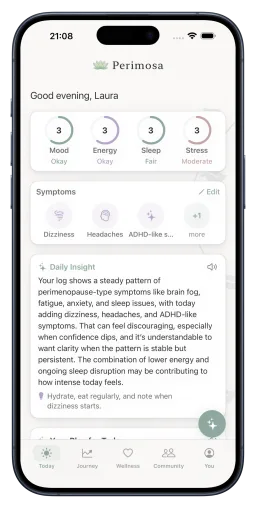
Finally understand what your body is doing
Perimosa logs how you feel each day, finds the pattern, and gives you the words to take to your doctor. Free on iPhone and iPad.
Get the free appVitamin D
Vitamin D is arguably the single most important supplement for perimenopausal women. Most are deficient or insufficient. It affects mood (low levels correlate with depression), immune function, bone density (increasingly important as estrogen declines), muscle strength, and possibly cardiovascular health. Get your 25-hydroxy vitamin D level tested -- aim for 40-60 ng/mL. Most women need 2000-4000 IU daily to reach optimal levels. Take with a fat-containing meal for absorption. D3 is preferred over D2.
B-Complex Vitamins
B vitamins support energy production, nervous system function, mood, and hormone metabolism. B12 specifically becomes harder to absorb with age and is critical for energy and cognitive function -- consider sublingual or methylcobalamin forms if you have absorption concerns. B6 supports neurotransmitter production. Folate (especially methylfolate for some women) supports mood and cellular function. A quality B-complex once daily covers all of them. Avoid mega-dosing individual B vitamins without testing -- imbalances can occur.
Vitamin K2 and Calcium
Vitamin K2 directs calcium to bones rather than arteries -- critical during perimenopause when bone loss accelerates and cardiovascular risk rises. It works synergistically with vitamin D. The MK-7 form is best for sustained effect. Calcium itself is important (1000-1200mg daily total from food and supplements) but should not be over-supplemented without K2 to direct it properly. Get most calcium from food (dairy, leafy greens, fortified plant milks) and supplement only the gap.
Omega-3 Fatty Acids
Technically a fatty acid rather than a vitamin, omega-3s (EPA and DHA) deserve mention because of how broadly they help: reduced inflammation, mood support, cardiovascular protection, possibly reduced hot flash frequency, and joint health. Aim for 1000-2000mg combined EPA/DHA daily from a quality fish oil or algae source. Choose products that are third-party tested for purity (no mercury, properly oxidized). Some women find it easier to get from eating fatty fish 2-3 times weekly.
Why Testing Your Vitamin D Level Matters
Vitamin D is the one vitamin you should never guess about during perimenopause. Levels vary enormously between women based on geography, skin tone, time spent outdoors, diet, and weight. The amount needed to reach the optimal 40-60 ng/mL range can be 1000 IU daily for some women and 5000+ IU daily for others. Without testing, you're guessing. Request a 25-hydroxyvitamin D test from your doctor or order one yourself through services like LetsGetChecked. Retest after 3 months of supplementation to confirm you've reached the target range. Vitamin D deficiency masquerades as fatigue, depression, brain fog, and poor immunity -- exactly the symptoms women attribute solely to perimenopause.
B12: The Vitamin That Goes Missing Without You Noticing
Vitamin B12 absorption decreases gradually with age, and many perimenopausal women are insufficient without knowing it. The classic symptoms -- fatigue, brain fog, mood changes, tingling in extremities -- overlap completely with perimenopause symptoms, so the deficiency gets missed. Vegetarians and vegans, women on metformin or proton pump inhibitors, and women over 50 are particularly at risk. Request a serum B12 level (ideally with methylmalonic acid for sensitive testing). If supplementing, methylcobalamin or sublingual forms absorb better than synthetic cyanocobalamin tablets. Tracking your energy and cognitive symptoms in Perimosa before and after B12 supplementation will tell you whether it's actually helping.
What to Skip From the Vitamin Aisle
Several popular vitamin choices are worth skipping. Mega-dose 'women over 40' multivitamins often contain forms (cyanocobalamin, magnesium oxide, folic acid instead of methylfolate) that are poorly absorbed. Iron in a daily multi is unnecessary unless you've tested deficient -- excess iron is harmful. Vitamin A in retinol form can be toxic at high doses; beta-carotene is safer. Vitamin E at high doses (>400 IU) has been linked to increased risk in some studies. 'Hair, skin, nails' formulas are mostly biotin (rarely needed) and collagen at subtherapeutic doses. Stick to evidence-based single nutrients chosen based on your specific needs and ideally blood-tested levels.
Bottom Line
The vitamins worth focusing on for perimenopause are vitamin D (test first, supplement to reach 40-60 ng/mL), B-complex (especially B12 and B6), vitamin K2 (MK-7 form, paired with D and calcium), and omega-3 EPA/DHA (technically a fatty acid). Skip most multivitamins -- single nutrients in the right forms outperform shotgun approaches. Get blood tests where possible rather than guessing. Track your symptoms in Perimosa before and during supplementation to confirm what's actually helping for your specific body, since the right combination varies significantly between women.
References
Medical disclaimer: This article is for informational purposes only and does not constitute medical advice. Always consult a qualified healthcare provider for diagnosis and treatment decisions. Perimosa is a symptom tracking tool, not a medical device.