Why Am I So Angry During Perimenopause?
You're feeling so angry during perimenopause because fluctuating estrogen disrupts the neurotransmitters (serotonin, GABA, dopamine) that regulate emotional intensity. Add sleep deprivation, hot flashes, and accumulated unaddressed stress, and irritation that used to pass quickly now escalates into rage. It's biology, not character.
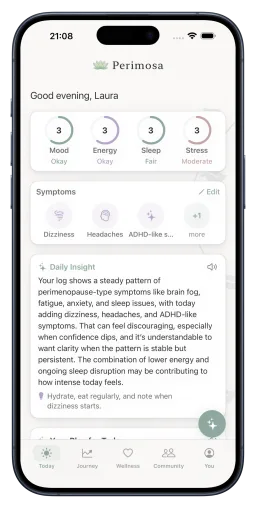
Finally understand what your body is doing
Perimosa logs how you feel each day, finds the pattern, and gives you the words to take to your doctor. Free on iPhone and iPad.
Get the free appThe Hormonal Reality of Anger
Anger during perimenopause feels different from any anger you've experienced before. It can erupt over things that wouldn't have registered a year ago. The intensity surprises you. The recovery takes longer. This is because estrogen directly supports the neurotransmitters that buffer emotional intensity. When estrogen swings unpredictably, those buffers thin. You're not becoming someone different -- your brain's emotional dampening system is temporarily less effective. Understanding this helps separate biology from identity.
Common Triggers in Midlife
Several midlife factors stack with hormonal anger. Sleep deprivation from night sweats reduces emotional bandwidth. Decades of suppressed frustration with unequal labor or unmet needs suddenly demand acknowledgment. Aging parents, teenagers, and career demands pile on. Low blood sugar (skipping meals) triggers anger fast. Being interrupted during overstimulation. Alcohol the night before. Hunger plus tiredness plus a small provocation can produce a reaction wildly out of proportion to the trigger.
Why the Anger Often Feels Justified
Many women report that perimenopausal anger feels different not just in intensity but in clarity. Things that bothered you mildly for years now feel unacceptable. Patterns you tolerated suddenly seem worth confronting. Some of this is real -- the dampening of social inhibition lets you finally name issues you've been swallowing. The challenge is separating valid grievances that deserve attention from disproportionate reactions you'll later regret. Both can be true at once.
What Genuinely Helps
Track anger episodes alongside your cycle, sleep, food, and circumstances -- patterns emerge that single bad moments don't reveal. Prioritize sleep ferociously, even at the cost of other commitments. Reduce or eliminate alcohol, which amplifies next-day anger. Strength training stabilizes mood significantly. Daily stress practices (meditation, breathing, time outdoors). When anger damages relationships or your sense of self, CBT and sometimes medication (SSRIs, HRT) can help dramatically. This isn't your new personality -- it's a phase, and it responds to treatment.
The Anger Pattern Worth Knowing
Perimenopausal anger often follows a predictable pattern once you start tracking. Late luteal phase (days 7-3 before period): emotional reactivity is dramatically heightened. Around ovulation: a smaller secondary spike. After alcohol consumption: a 1-2 day window of lower threshold. Days following poor sleep: short fuse all day. Low blood sugar moments: anger flares within minutes. Logging anger episodes in Perimosa with cycle phase, sleep, food, and alcohol over 4 weeks usually reveals 2-3 reliable patterns. Once you can see them, you can plan around them -- protect important conversations away from your hardest cycle days, eat earlier on low-blood-sugar mornings, eliminate alcohol if rage patterns intensify the day after.
What This Anger Often Reveals
Perimenopausal anger isn't always purely chemical. Sometimes it's accumulated frustration finally surfacing because the emotional dampening you maintained for years is biologically reduced. Many women report finally seeing clearly what they had been tolerating for decades -- unequal labor at home, dismissive treatment at work, relationships requiring renegotiation, life patterns that didn't match their actual values. This 'midlife clarity' is real and often productive even when it presents as anger. The challenge is separating valid grievances that deserve real attention from disproportionate reactions you'll later regret. Both are usually present at once. Therapy during this phase often helps women sort through what's hormones, what's accumulated truth, and what's both.
The Foundations That Tame Hormonal Anger Most
Several foundations dramatically reduce hormonal anger episodes when built consistently. Sleep is the single biggest lever -- one bad night noticeably worsens next-day reactivity. Eliminating alcohol or dramatically reducing it eliminates the next-day rage window for most women. Eating regularly with adequate protein prevents the low-blood-sugar rage flares. Strength training stabilizes mood significantly within weeks. Daily stress practice (10 minutes of breathing or meditation) raises your overall threshold. Tracking what you've changed in Perimosa over 8 weeks lets you measure which changes actually reduced your anger episodes -- some interventions move the needle dramatically, others don't, and the only way to know which is which for your specific body is to measure.
Bottom Line
Anger during perimenopause is biology amplifying everything you'd been feeling anyway, with reduced ability to dampen it. The intensity is real; you're not becoming a different person. Track patterns in Perimosa for 4 weeks to identify your specific triggers. Build foundations: sleep, no alcohol, regular meals with protein, strength training, daily stress practice. Address valid grievances thoughtfully rather than reactively. For severe anger that damages relationships or your sense of self, talk to your doctor about HRT, SSRIs, or therapy -- all of which can transform this experience. The intensity is finite; with proper support, you can navigate this phase without permanently damaging things that matter to you.
References
Medical disclaimer: This article is for informational purposes only and does not constitute medical advice. Always consult a qualified healthcare provider for diagnosis and treatment decisions. Perimosa is a symptom tracking tool, not a medical device.